VR project aims to boost UK’s medicine manufacturing skills
- 19 January 2026

- More than 140,000 people are needed in medicine manufacturing over the next decade
- VR training saves vital resources and limits consequences of mistakes
- Tech lets young children try their hands at virtual lab work
A £4.3 million UK government scheme is aiming to inspire more than 140,000 people into medicine manufacturing over the next decade using virtual reality (VR) training.
Advanced medicines manufacturing is suffering from an acute skills gap, and with a lack of young people entering the sector.
The government scheme Resilience uses VR to recreate the country’s most advanced lab facilities in 3D to help educate the next generation of medicine makers while saving money and resources.
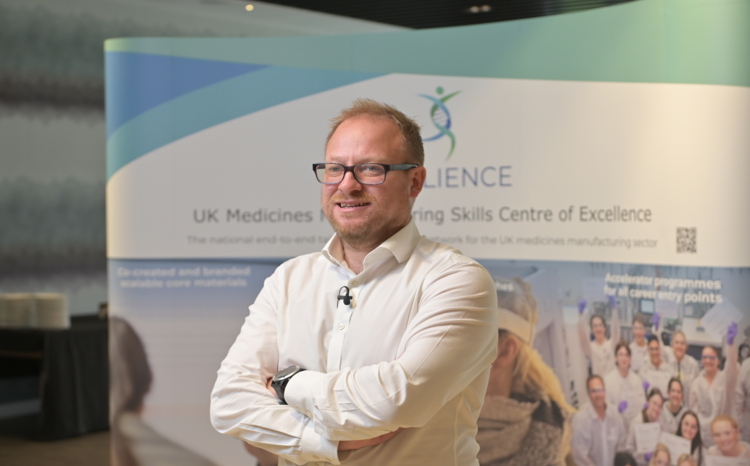
Ivan Wall, the director of Resilience and a professor of regenerative medicine at the University of Birmingham, spoke to Digital Health News about the two-year project.
“Training in cleanrooms is expensive and highly regulated and colleges and universities usually don’t have access to the equipment, but we can recreate these environments digitally to train people,” Wall said.
Physical training wastes expensive chemicals and materials that could better be used to manufacture medication. With VR, a trainee can repeat a task 100 times, such as assembling a bioprocessing unit, without using precious resources or risking expensive and fragile equipment.
In the 18 months since Resilience launched, partners have saved half a million pounds in PPE costs, £7m in equipment – including 10,000kgs of single-use plastics – and 30,000 kilogrammes in CO2 emissions.
Ivan said that mistakes in the pharmaceutical industry can be costly, which can take a psychological toll on trainees using real chemicals and equipment.
“It’s daunting and can cause extreme psychological pressure,” he said. “Reducing errors is vital, so VR enables them to make these mistakes in a safe space and become confident, reducing anxiety and pressure in a real facility.”
As well as hands-on training, Resilience uses VR as a recruitment tool, letting younger people and those from underrepresented backgrounds experience the industry first-hand. Children as young as primary school age can get a feel of medicine making – something that would not be possible in a real lab.
Ivan, who earned a PhD in cell and molecular biology studying wound healing, sparking a career focused on tissue repair, regeneration, and stem cell biology, added: “We want to give companies and companies and education providers the tools to upskill people and show what careers in the industry look like. We want to break down barriers for different groups of people.”
The technology also allows training to be standardised across regions and sites and there’s no limit on class sizes – critical for accelerating workforce growth as new medicines such as gene therapies, cellular therapies, and vaccines become increasingly adopted in healthcare.
“VR is a technology that is rapidly developing, Ivan adds. “This isn’t the pinnacle of what we can achieve. In the same way as early PC processors and smartphones, VR is in that sweet spot where the technology gets much better every couple of years.”