Kate Warriner: ‘Young people want us to bring them the future’
- 21 January 2026
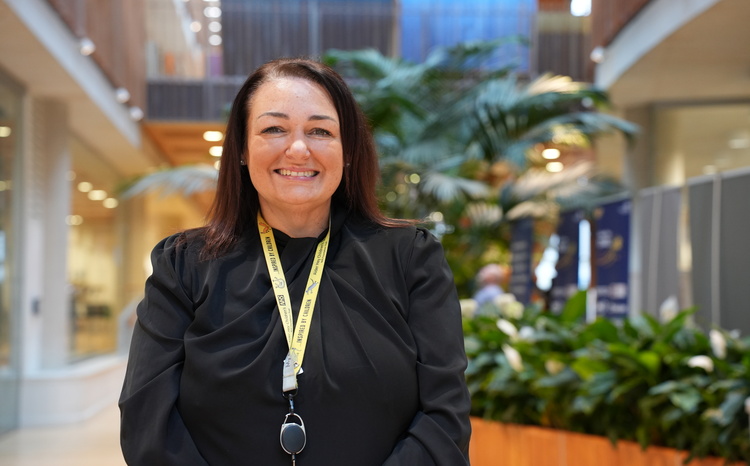


Kate Warriner, chief transformation and digital officer at Alder Hey NHS Foundation Trust, resists being pigeonholed. A classically trained musician, she describes herself as “quite a creative person”.
Creativity, kindness, and a commitment to “delivering messages in a very accessible, non-technical way” are essential to a digital leadership style which saw her lauded as the UK’s top chief information officer (CIO) in 2025.
Ahead of her keynote at Digital Health Rewired 2026, Warriner tells Digital Health News why Alder Hey’s clinicians’ love AI scribing technology and how the trust’s “inspirational” young patients helped to shape its digital strategy.
How does a music graduate end up being named the UK’s top CIO?
I’m musician by background but my mum and my auntie are both nurses, so the NHS has always been close to our family.
In my second year at university studying music, I got a job in primary care, going around GP practices and coding on their computer systems. When I graduated, I applied for a job as digital systems trainer and then got a brilliant opportunity to do a master’s degree in digital health. And the rest just followed. I found a passion for seeing the difference that technology can make.
Creativity from music and creativity in terms of the strategic work around digital can definitely align
I think there might be connections [between music and digital health]. I chair a local orchestra, and we’ve got a lot of NHS people in the orchestra, some in digital.
My digital career has been through transformation rather than a technical route. I think that creativity from music and creativity in terms of the strategic work around digital can definitely align.
How do you utilise AI without undermining the human connection in healthcare?
You’ll have seen through our AI strategy, our commitment to equip everyone with AI assistance and to empower staff with more time to care. For children, young people and families, empowerment is being able to navigate our services in a way that’s not clunky for them.
In terms of AI, and more generally, keeping ‘the human in the loop’ has been very important. It’s a key part of our vision around a healthier, happier, fairer future.
But one of the things that children and young people said to us in the work we did was ‘bring us the future’.
We know that kids – babies – can use an iPhone before they can speak. They can navigate their way around smartphones. Cohorts of the population we are here to serve will often be the first users of new technologies.
As a digital leader, is it exciting to work with young people who are so engaged with technology?
It is – and we do. We’ve got a thriving children and young people’s forum. They’re in the trust at least once a week and they’re an accessible group for all our leaders, who can talk to them about whatever topic they want their help with.
We genuinely put children and young people in the middle of what we do. They give us energy and inspiration
We genuinely put them in the middle of the design of what we do. They give us energy and a lot of inspiration – they’re just fantastic.
They can also be quite terrifying. Not long after I started in post, I went to see the Children and Young People’s Forum and they were very clear. It was ‘why do you send us so much paper? Stop sending us paper.’
They’re thinking about things they want us to do. It’s our job to respond to that and work with them.
What impact has AI scribing had on clinicians at Alder Hey?
We’ve got about 1,200 colleagues using ambient voice technology and we are looking to ramp that up and deploy it even further. The majority of people have been really receptive.
We’ve described it as ‘magnetic technology’ in that we’ve almost had waiting lists of people wanting this technology.
We’ve described ambient voice technology as ‘magnetic technology’. It really helps with clinicians’ cognitive load
One of our surgeons did a study where he compared a set of [conventional] letters with a set of letters from the ambient voice technology. He got his peers to review both sets of letters and 85% preferred the ambient voice technology. The time saved differs by specialty, but the aggregate is about 10 minutes per patient.
We’ve also found it really helps with clinicians’ cognitive load – and that’s something we hadn’t anticipated going into the initial pilot. Time to think and process differently has been fantastic.
Families like it as well – we’ve had good feedback from families and from staff.
Can you give us a taste of what you will be talking about at Digital Health Rewired 2026?
We’re keen to share a few things about our digital journey and what we’ve achieved from a cultural point of view and from a leadership point of view. We’re looking to showcase the practicalities around some of the work we’ve done on AI, as well as the work that we’re doing with children, young people and families.
Warriner will deliver a keynote at Digital Health Rewired, which is taking place on 24-25 March 2026 at The NEC in Birmingham. Register here
Rewired 2026’s headline sponsors are The Access Group and Optum, who will also sponsor the Integrated Care and Digital Transformation stages respectively.